
I am sure you must have heard the term “supplier diversity” in procurement meetings. Most people seem to get the gist. You purchase from diverse businesses. That’s the basic idea. But Tier-2 supplier diversity goes a lot deeper than that.
And to be honest, it is something more companies ought to pay close attention to.
So, what’s a Tier-2 supplier?

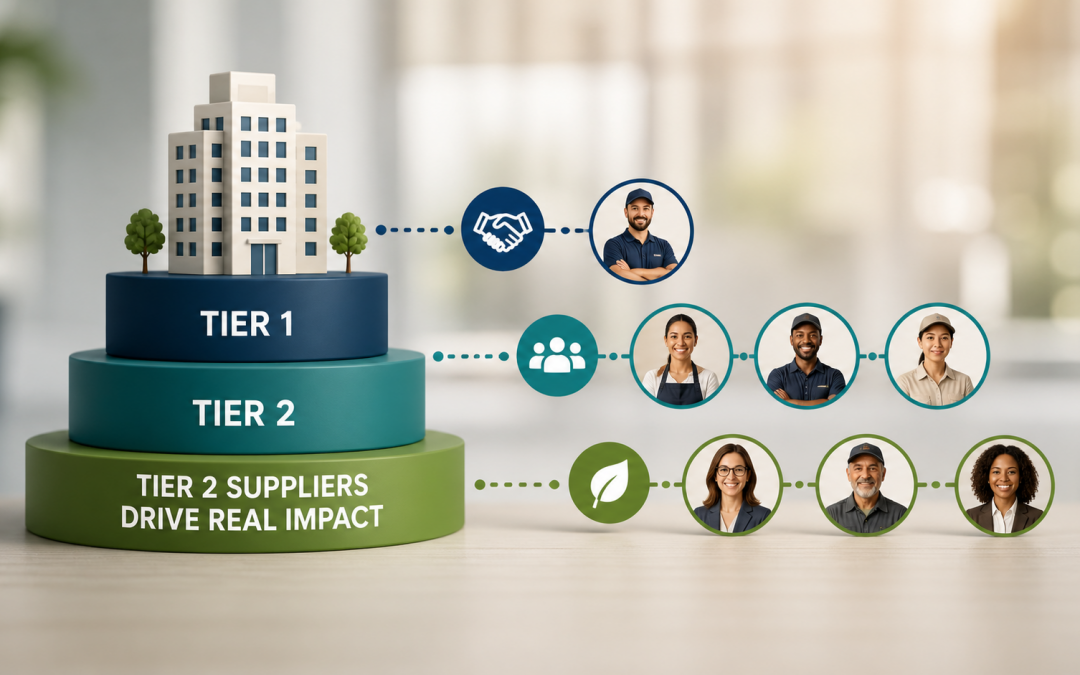
Start simple. A Tier-1 supplier is a company you pay directly. You sign the contract. You send the check.
A Tier-2 supplier is your supplier’s supplier. You don’t pay them. You don’t hold a contract with them. But they do work that connects back to your business. Picture it like a chain. You hire a large contractor. That contractor hires smaller shops to get things done. Those smaller shops are your Tier-2 suppliers.
Tier-2 supplier diversity means some of those smaller shops are minority, women, or veteran-owned, or small businesses. And you track all of that.
Why does this matter?
Your direct spend only goes so far. Some major categories have few certified diverse suppliers at the Tier-1 level. That’s a real wall, and many companies hit it fast.
But your Tier-1 partners buy from hundreds of vendors to serve you. That’s a huge pool of spend you can actually shape. Tier-2 programs let you reach into that pool and support diverse businesses you’d never find on your own. That’s a real win for any company serious about supplier diversity.
It also helps with contract goals. Many big contracts, especially with government clients, need Tier-2 diversity reporting. Your prime suppliers submit reports that show how much they spent with diverse sub-suppliers on your behalf.
Two types of Tier-2 spend
Tier-2 spending is not homogeneous. There are two primary classifications:
Direct Tier-2: Your supplier sources from a diverse business specifically for your project. Very clear. Very tied to you.
Indirect Tier-2: Your supplier spends with diverse vendors for all their business. They attribute a piece of that spend to you based on your proportional share of their business.
Direct is clearer. It demonstrates a real impact that is linked to your work. Indirect is more prevalent in large programs. Still beneficial, but less precise.
What goes into a Tier-2 report
These reports also come from Tier-1 suppliers. They identify suppliers and list the spend amounts, the type of diverse business, and the spend classification (direct or indirect).
Good programs have common templates and clear deadlines. Good programs also keep data clean, and dirty data is the enemy of good reporting/numbers. The cost is the loss of credit for work already done.
A real-world example

Let’s take an example of a national facilities management company. You enter a direct contract with them for the management of your buildings. Then she subcontracts a woman-owned janitorial services company, a veteran-owned security services company, and a local small business for landscaping at your facilities. All of these qualify for your Tier-2 diversity spend.
You did not source those vendors. Your prime did. But your diversity advocacy made them do it. That is the real power of an effective Tier-2 program. It expands your reach beyond your own procurement team.
Things to get right
- Keep your data in good condition. Dirty data leads to dirty reports.
- Create timeframes. In most programs, quarterly is enough.
- Don’t leave your prime suppliers to guess. Tell them what you want.
- Understand both direct and indirect spend. Know the difference.
- Keep an eye on sub-suppliers who may be worth elevating to Tier-1 over time.
Final thought
Tier-2 diversity programs allow you to genuinely expand your supply chain impact. Your prime contractors collaborate with numerous vendors that you will never connect with. Direct them to the right place. Advocate for diverse options across all tiers. That is how supplier diversity programs improve substantially.